01
Defined windows
A baseline and a test window agreed in advance, so the comparison is not chosen after the fact.
Six stages, in sequence. The purpose of writing them down is that both sides know what happens next, what has to be true before the next stage starts, and who signs off.
We start with what exists rather than what is aspirational: your role in the chain, the offers or traffic you already hold, capacity, compliance posture, and the outcome you are being measured on.
Some discovery calls end with us saying no. That is a successful call.
We match the opportunity against partner terms and the rules of each market in play. Availability, payout structure, and creative restrictions differ by geo, and those differences decide what is actually runnable.
We work globally. Offer availability depends on partner terms and local rules.
Measurement is built before spend. Pixels, postbacks, parameters, and naming conventions are configured and validated, and creative is produced for the destination environment rather than adapted to it later.
Advertorial-style pages are labelled as advertisement or sponsored content.
The first push is deliberately small and time-boxed. A defined test window with a defined read is worth more than an open-ended launch that nobody can interpret afterwards.
Timelines vary by partner, platform review, and market.
Model-supported analysis reviews creative, landing experience, and conversion patterns and returns a ranked queue of suggested tests with reasoning attached. An operator checks each against offer terms and compliance rules and decides what ships.
AI-assisted recommendations are decision support. Operators review changes before they go live.
Reporting arrives with its context: the window, the traffic mix, the known variables, and an honest statement of where the read is weak. Then we decide together what the next iteration is.
Results vary by offer, geo, traffic source, creative, competition, and budget.
At the reporting stage we compare a defined baseline window against a defined test window, metric by metric, and state what changed and what we cannot yet attribute. The layout below is an example of that structure.
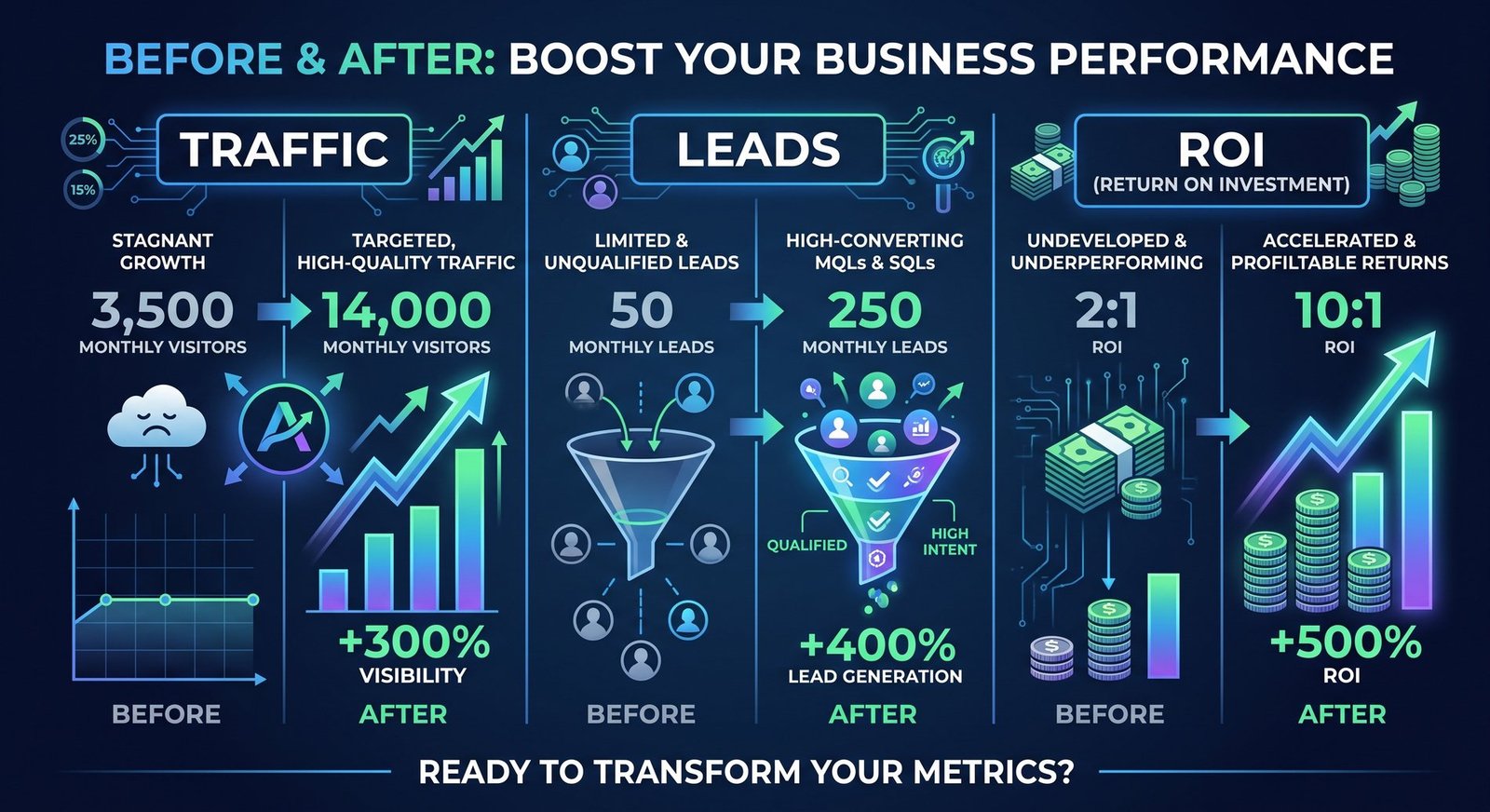
A baseline and a test window agreed in advance, so the comparison is not chosen after the fact.
Traffic mix, creative changes, seasonality, and platform changes noted alongside the numbers.
Where the sample is thin or the attribution is contested, the report says so rather than rounding up.
The review queue is the control point. Nothing reaches a live offer path without an operator reading the suggestion, checking it against the offer terms and platform policy, and approving it by name.
Interface illustration of the operator review queue. AI tools support analysis only.
Discovery is a conversation, not a pitch. Bring your role, your markets, and your constraints, and we will tell you what stage two would need to look like.
Offers and campaigns are subject to partner, publisher, and platform review. We do not guarantee volume, EPC, approvals, or results.
Disclosure. Affiliate Growth Network is a performance marketing and offer-partnership company based in Miami, FL. Traffic, lead quality, and offer performance depend on partner terms, platform policies, creative, competition, geo, and budget. We do not guarantee volume, approvals, or results. AI tools support analysis only.